WHAT IS A MODERN GARDEN?
A modern garden is not defined by a specific plant palette or a particular design style. It is a thoughtful extension of the living space into the outdoors—a place where aesthetics, functionality, and nature come together as one.
Contemporary garden design is moving away from purely decorative solutions. Instead, it embraces naturalistic planting, sustainability, and the desire to create landscapes that evolve with the changing seasons. Today, landscape design is not only about how a garden looks, but also about how it makes people feel.
NATURALISTIC PLANTING AND RICH PLANT DIVERSITY

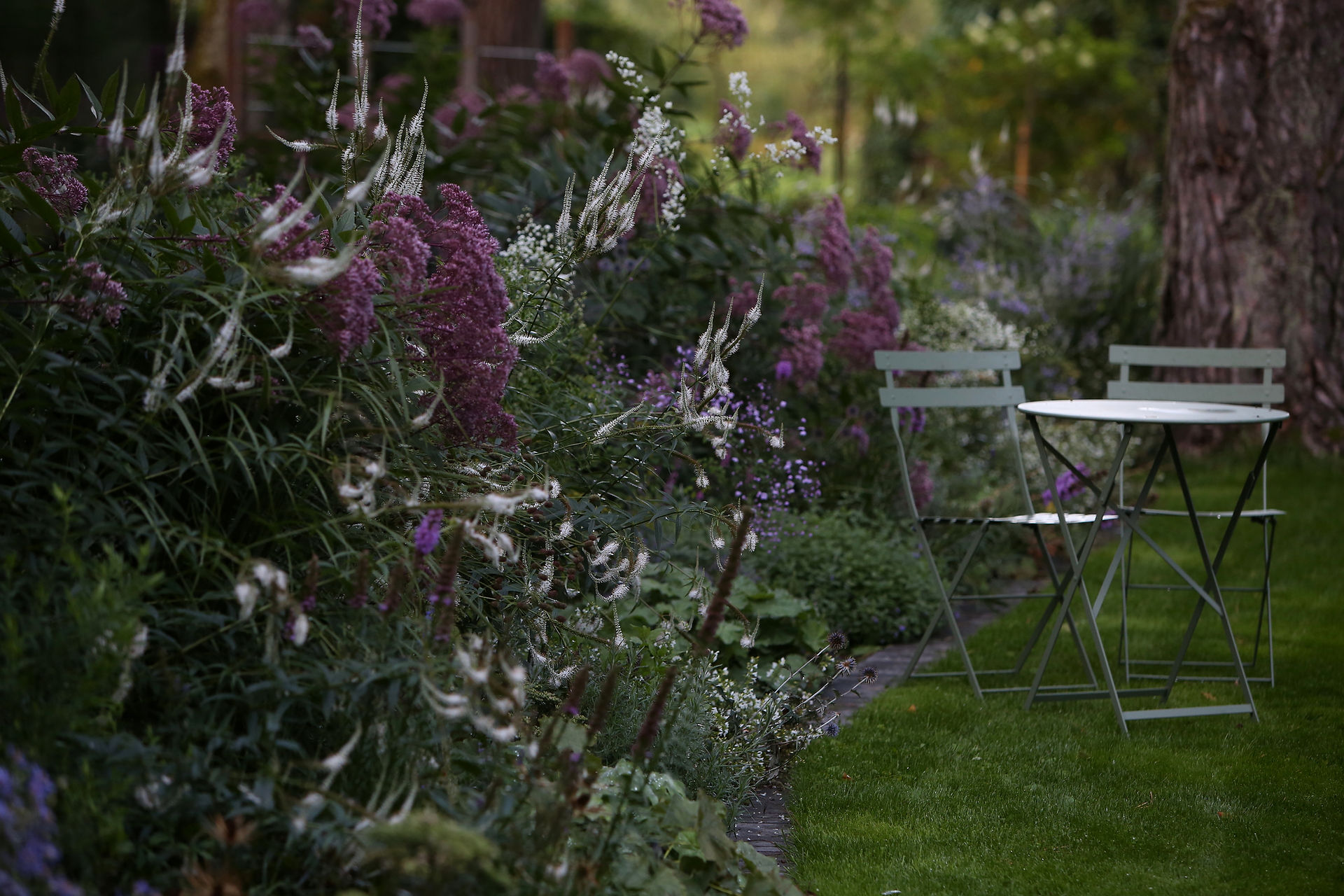
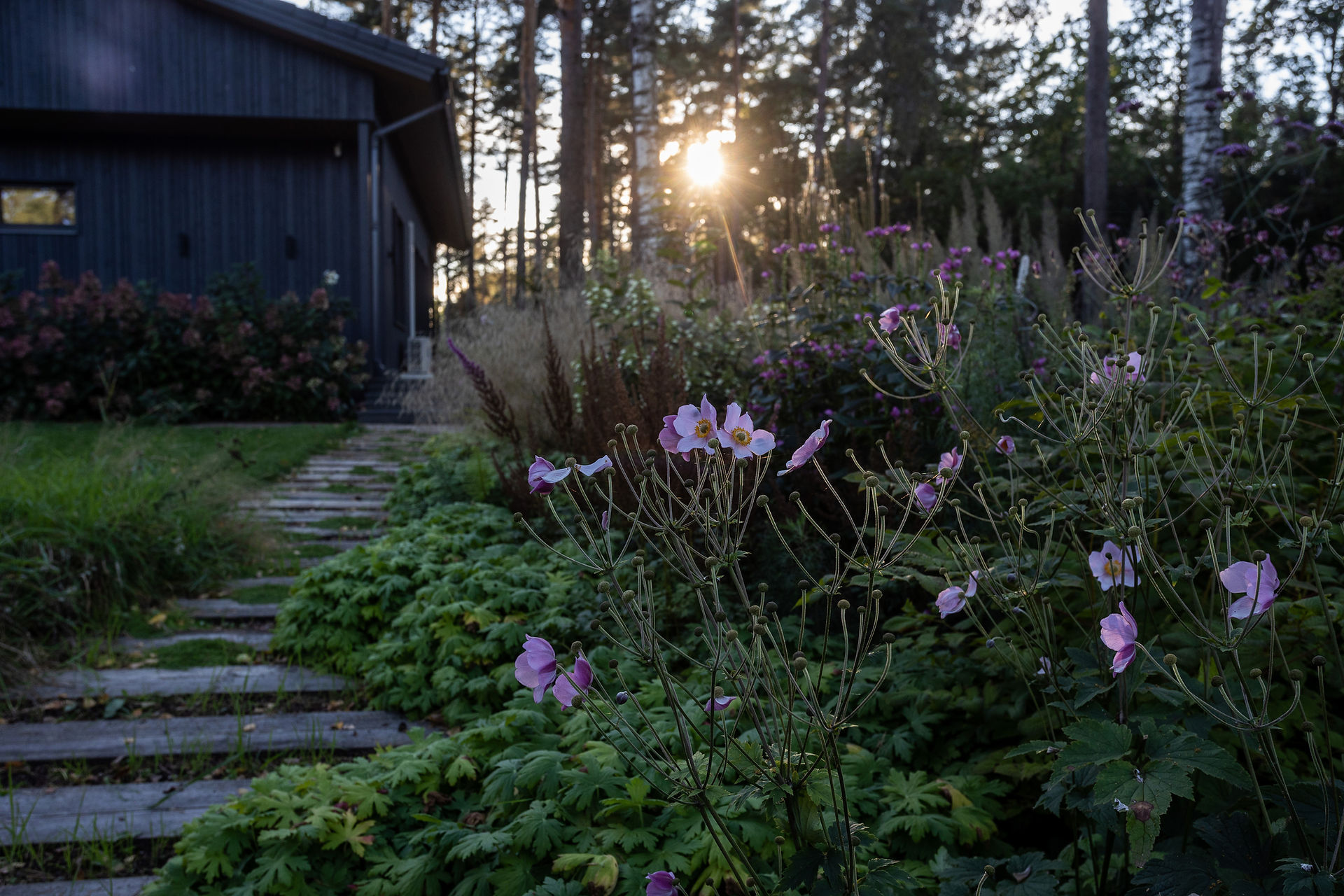
Naturalistic planting with perennials, ornamental grasses, and evergreens in a contemporary garden.
One of the defining characteristics of a modern garden is its naturalistic planting style. Plants are arranged in multiple layers to create dense, abundant compositions that evolve throughout the seasons.
Nature rarely leaves empty spaces, and modern garden design follows the same principle.
Groundcovers weave across the soil, flowering perennials and structural plants occupy the middle layer, while ornamental grasses and airy flower heads add movement and lightness. Carefully selected shrubs and trees form the framework of the planting, creating depth, height, and a strong sense of structure.
The result is a vibrant, richly textured landscape that continuously changes throughout the year.
THE BALANCE BETWEEN NATURE AND ARCHITECTURE

A classical fountain surrounded by naturalistic planting of perennials and ornamental grasses in a contemporary garden.
Modern landscape design often relies on contrast.
Flowing perennial borders and ornamental grasses are set against clean architectural lines, elegant paving, timber terraces, minimalist buildings, or perfectly maintained lawns. Carefully clipped hedges frequently complete the composition.
It is this balance that defines the character of a contemporary garden. Naturalistic planting softens the precision of architecture, while clean geometric forms provide structure, order, and visual clarity.
YEAR-ROUND INTEREST

A bench surrounded by ornamental grasses and shrubs in the rich colours of autumn.
A well-designed garden does not lose its appeal when the last summer flowers fade.
Professional garden design considers year-round interest from the very beginning. Every plant is carefully selected by analysing flowering periods, foliage colour, texture, structure, and seasonal changes to ensure the garden remains visually engaging throughout the year.
Spring begins with bulbs and the first emerging flowers. Summer brings perennial plantings to their peak. Autumn transforms the garden with warm tones, while winter reveals the beauty of trees, shrubs, ornamental grasses, and the dried seed heads of perennials.
Frost, snow, and morning dew accentuate the architecture of the plants, allowing the garden to retain its character even during the quietest months of the year.
MULTI-STEM TREES AS SPATIAL ELEMENTS
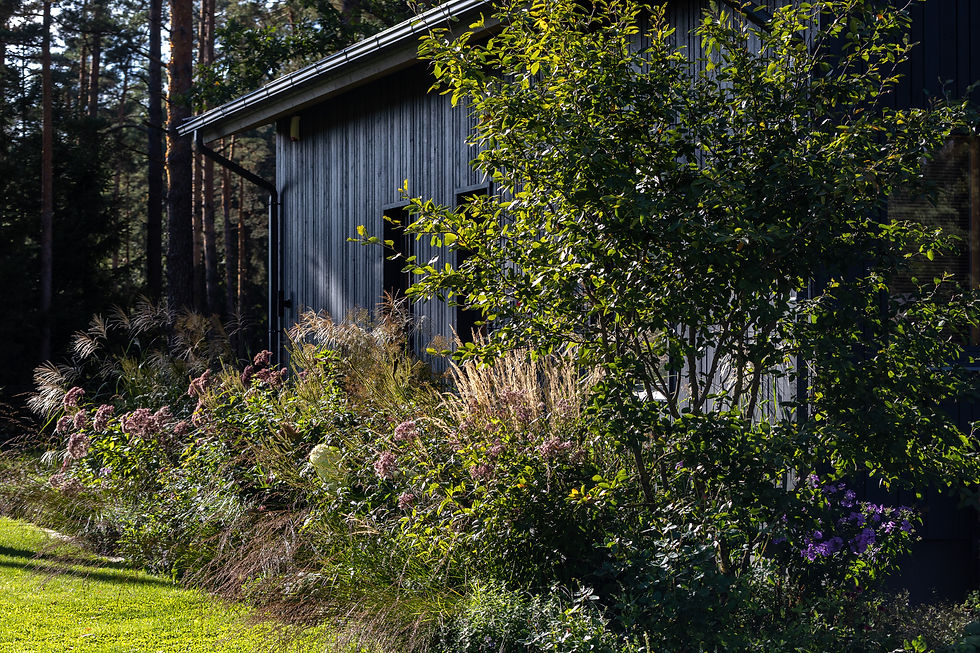
Contemporary architecture combined with naturalistic planting of perennials and ornamental grasses in a landscape design project.
Multi-stem trees have become one of the defining features of contemporary garden design.
Their open, airy canopy preserves a sense of space while introducing strong vertical accents into the landscape. They help divide the garden into distinct areas, create subtle screening, and guide views through the space without making it feel enclosed.
Because their trunks occupy relatively little ground space, multi-stem trees allow perennial borders and ornamental grasses to flourish beneath their canopy. They are among the most effective tools for creating depth, structure, and atmosphere in a modern garden.
FUNKCIONALITĀTE IR VISA PAMATĀ

Contemporary garden lighting highlights planting, trees, and architectural elements.
While planting trends continue to evolve, one principle remains unchanged: a garden should be designed to make everyday life easier.
A modern garden is a carefully engineered project where technical solutions are integrated from the very beginning. Automatic irrigation, robotic mowing systems, stormwater drainage, landscape lighting, and other essential infrastructure are all considered during the design stage.
After dark, lighting reveals an entirely new dimension of the garden, highlighting tree trunks, planting textures, and architectural features while creating safe and inviting routes through the landscape.
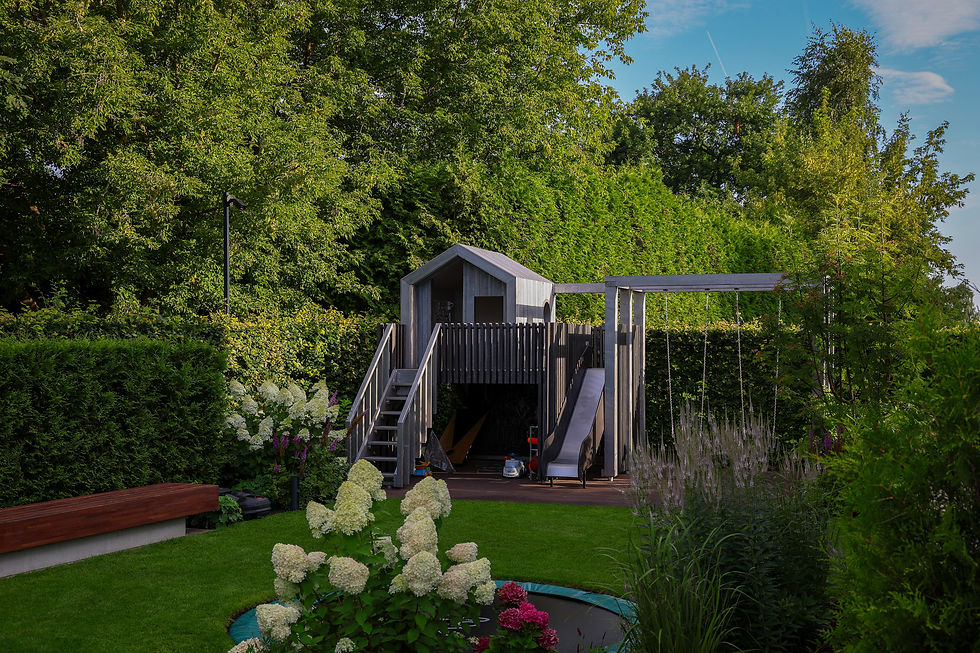
Equally important is the way the garden is organised. Terraces, fire pit areas, children's play spaces, outdoor kitchens, and quiet seating areas are planned around the lifestyle and daily routines of the people who will use them.
Most technical systems remain completely invisible. They work discreetly in the background, allowing the garden to feel effortless, natural, and beautifully understated.
EVERY MODERN GARDEN BEGINS WITH A THOUGHTFUL PLAN
Whether you are creating a garden yourself or working with a landscape architect, one of the most valuable investments you can make is a professionally developed garden design.
A thoughtful garden design is about much more than beautiful planting. It creates a landscape that is functional, easy to maintain, and attractive throughout every season.
The better the technical aspects are resolved, the more time remains for what truly matters—relaxing outdoors, watching the seasons unfold, and enjoying life surrounded by nature.


Dobe no ziemcietēm un dekoratīvajiem krūmiem mūsdienīgā dārza stādījumā.